Many attend their first opera unaware it could become a lasting passion; for others, it's simply a beautiful, one-time experience. Either way, a few keywords make the evening more enjoyable. What helps a first-timer isn't music theory but key terms: what an aria is, why some singers are sopranos and others mezzos, and what happens before the singing begins. Vocabulary unlocks the evening. This guide covers the essential terms and ideas you'll want to know before your first performance, explained just as we would to a guest at dinner. No musical background is needed. If you're interested in the fuller story of opera's origins and growth, our companion guide, What Is Opera? A Journey Through Its History and Elements, continues the conversation.
You'll hear operas sorted into a few broad families. Each tells you roughly what kind of evening to expect.
We explore how these styles emerged and evolved in our companion guide, What Is Opera? A Journey Through Its History and Elements. For your first night, what matters more than the category is knowing what to listen for — which is where the rest of this guide comes in.
The orchestra is opera's engine. Before a word is sung, it sets the mood. Two terms to know:
The orchestra divides into four sections, each adding a distinct layer to what you hear:
The libretto is the opera's text, its words and script, often drawn from a play, poem, or historical event. Within it, you'll encounter three kinds of singing:
Sets, costumes, and lighting build the world of an opera. In Europe's great opera houses, this is where the art form earns its reputation for spectacle.
On your first visit, don't treat the evening as an exam. Enjoy the atmosphere, take in the energy of the house, and let yourself relax into the rhythm of the performance without pressure. Opera blends music, acting, singing, and spectacle all at once. One performance won't decide if opera is for you, let the experience simply be what it is.
In opera, a singer's voice type determines the role. Even before a character acts, their voice type suggests who they are — the hero, the rival, the king. Here are the six main voice types, each shaped by the singers who made them legendary.
It's worth knowing that when two characters with similar voice types face off, or when a soprano and a tenor sing as lovers, the composer is using their voices to reveal the relationship. With time, you'll notice these patterns without thinking about them.
Operas are divided into acts, then scenes. Each act advances the story in a substantial way; scenes move between locations or moments within it. Puccini's La Bohème, for example, unfolds in four acts, each a chapter in the lovers' story.
Recitative moves the story; arias let a character feel. Famous arias include Verdi's "La donna è mobile," Puccini's "Nessun dorma," Mozart's "Queen of the Night," and Bizet's "Habanera." You'll likely recognize some of them before you've heard an opera in full.
Ensembles are where opera does something a spoken play cannot: multiple soloists sing simultaneously, each expressing a different emotion. The famous quartet in Verdi's Rigoletto layers four distinct feelings in a single scene, jealousy, longing, amusement, and grief, all at once.
A popular starting point is the ABC of Operas: Aida, La Boheme, and Carmen. All are dramatic, tuneful, and easy to follow on a first visit.
No matter which opera house you visit, take a moment to appreciate what you're seeing: emotion expressed through singing and acting, and the courage it takes to perform before a full house. As a first-time visitor, your only task is to enjoy it. You don't need to perform or hit the right note, just experience it.
"Opera rewards curiosity. You don't need to learn every book by heart before attending your first performance, just relax and let the evening carry you. These terms are enough to follow any stage."
HAT Tours Editorial Team
Ready to Hear These Works Live?
Since 1982, we've guided first-time opera-goers and seasoned enthusiasts alike through Europe's great opera houses. Our small-group tours feature first-category seats and performances of works by Verdi, Wagner, Puccini, Rossini, Mozart, Bizet, Donizetti, Bellini, Richard Strauss, and Tchaikovsky, as well as select rarely performed operas.
See All Tours Explore Opera HousesWhat is an aria?
An aria is a solo vocal piece in which a single character pauses the action to express one strong emotion. It is the moment an opera lets a feeling fully bloom, and often the passage an audience remembers for years.
What's the difference between a soprano and a mezzo-soprano?
A soprano is the highest female voice and almost always sings the heroine or romantic lead. A mezzo-soprano sits slightly lower, with a darker tone, and often plays the rival, seductress, or a more complex woman at the story's heart. Carmen is the most famous mezzo role in the repertoire.
What is a libretto?
The libretto is the text of an opera, its words and script, often based on a play, poem, or historical event. The librettist who writes it works in close collaboration with the composer.
What's the easiest opera for a beginner?
Most first-time visitors do well with La Bohème, Carmen, or The Magic Flute — all melodic, emotionally direct, and easy to follow. La Bohème is particularly recommended: its story is immediate, its music is consistently beautiful, and its emotional arc is accessible to anyone.
Do I need to understand the language to enjoy opera?
No. Virtually every major European opera house provides surtitles, translations projected above or beside the stage, so you can follow every line in real time. The music communicates far more than the words do in any case.
About the Author
Written by the editorial team at HAT Tours - European Opera Tours since 1982. Over four decades, our team has attended performances at La Scala, the Vienna State Opera, the Bayreuth Festspielhaus, the Verona Arena, the Paris Opera, and more than thirty other European opera houses.
The lights dim, the first chord sounds, and the music reaches you before you have understood a word. That is opera's pull, and its invitation. There is always more happening on the stage than any of us catches, and the more you learn to notice, the m
August 20, 2026
For many first-time listeners, the name Richard Wagner may initially evoke awe, curiosity, and perhaps a hint of hesitation. His operas are famously long, his stories mythic and layered, and his reputation as a revolutionary artist larger than life. The i
September 22, 2025

Richard Wagner was more than a composer - he was a force of nature who reshaped the very idea of what opera could be. Born in Leipzig in 1813, Wagner defied convention at every turn, fusing myth, music, poetry, and staging into something unprecedented.
September 19, 2025
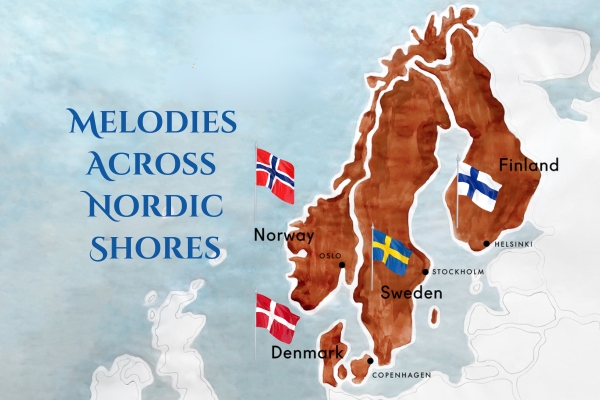
A Cultural Journey Through Time Opera has been esteemed as a significant art form in Scandinavia for many years. It is characterized by the intricate integration of classical traditions with innovative contemporary performances.
December 27, 2024
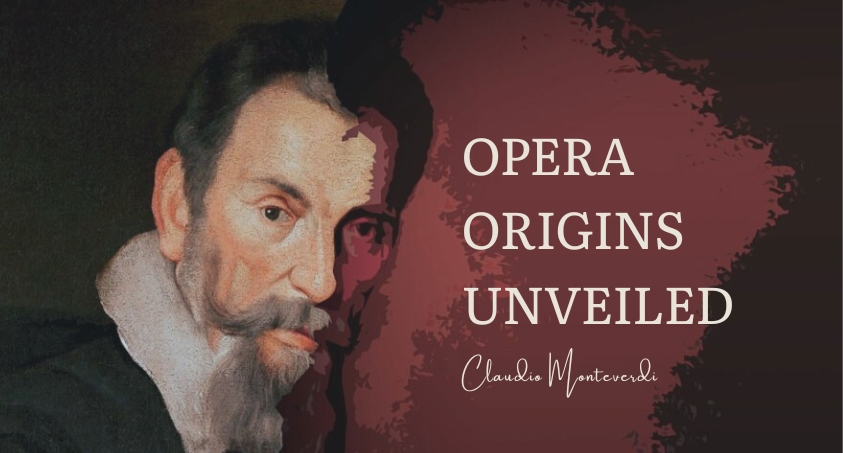
The Renaissance was a period of profound transformation that ushered in a new era of creativity and expression. Among its many artistic innovations, opera stands out as a unique fusion of music, drama, and visual spectacle.
September 05, 2024