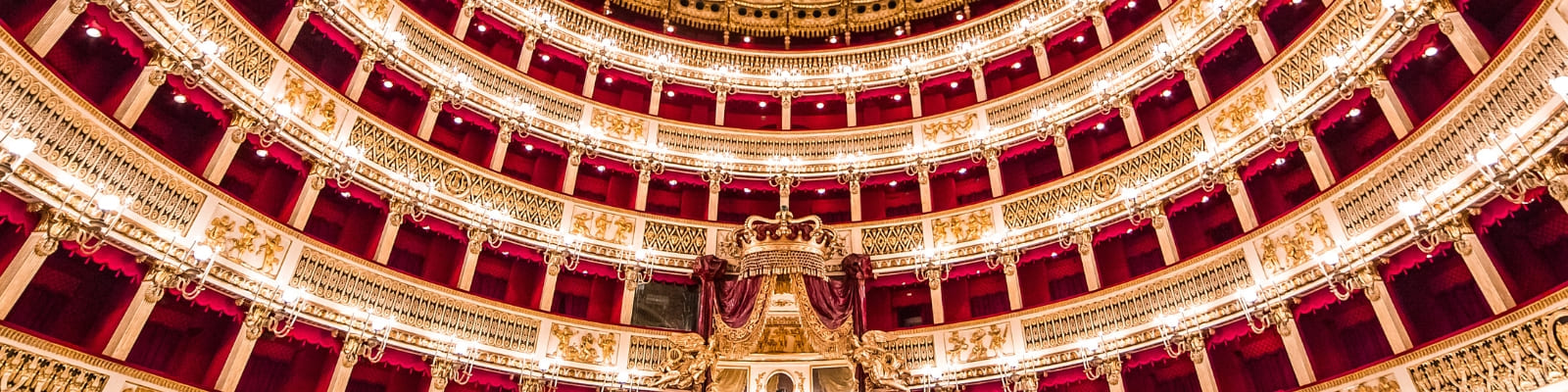
Wagner's operas, known for their length (three to six hours), mythic density, and intense focus, can seem intimidating. Yet his shorter works, The Flying Dutchman (about 2.5 hours) and Lohengrin (3.5 hours), are inviting entry points requiring no prior knowledge and offer emotional immediacy. Hesitation typically vanishes once the music begins.
For many, the name Richard Wagner brings a mix of awe, curiosity, and hesitation. His operas are famously long, drawn from Norse and Germanic myth, and his reputation as a revolutionary artist is formidable. Sitting through Der Ring des Nibelungen, four operas spanning 15 hours, may sound more like a challenge than an event.
Wagner is both demanding and direct. His music explores deep ideas but also connects instantly with a surge of strings, a horn call, or a quiet duet. Wagner envisioned opera as a total work of art, combining music, drama, poetry, and visuals for an immersive experience that sweeps audiences away.
If you are new to Wagner, remember: you do not need to catch every leitmotif or understand every mythological reference to enjoy his music. Let the sound carry you. This is essential advice for anyone experiencing Wagner for the first time.
For seasoned Wagnerians, the experience is different but no less alive. Each production reveals something new: a conductor's tempo choice that reframes a familiar scene, a singer's phrasing that unlocks an emotion you didn't know was there, a staging that makes you hear the same notes differently. Wagner never stops revealing himself, whether it is your first encounter or your fiftieth.
That range is unusual in opera, and it is one of the reasons Wagner's audiences are so loyal. You don't graduate from him. You go deeper.
The Ring Cycle is the summit of Wagner's achievement, but it is not the entry point. For most first-time listeners, experienced guides consistently recommend beginning with The Flying Dutchman or Lohengrin, as they are shorter and more accessible than the larger Ring Cycle operas.
| Opera | Running Time | Why It Works as a First Wagner |
|---|---|---|
| The Flying Dutchman | Approx. 2.5 hours | Storm-driven, compact, no interval complexity. Wagner's most immediate opera. |
| Lohengrin | Approx. 3.5 to 4 hours | Shimmering orchestration, fairy-tale clarity, and the universally known Bridal Chorus. A natural entry point. |
| Tannhauser | Approx. 4 hours | The tension between sacred and profane love, told through unforgettable melodies. Dramatically vivid. |
| Tristan und Isolde | Approx. 4.5 hours | More demanding, but its harmonies changed the entire course of Western music. Best after one or two of the above. |
Even experienced Wagnerians revisit these works throughout their lives, finding that familiarity opens up new insights rather than diminishing them.
One of Wagner's most significant innovations was the leitmotif: a short musical phrase tied to a specific character, object, or emotion. These motifs recur throughout an opera, transforming and developing alongside the drama. They are Wagner's way of giving the orchestra its own voice in the story commenting, foreshadowing, and contradicting what characters say aloud.
For a beginner, you don't need to identify them by name. Just notice when a phrase feels familiar. That recognition the sense that you've heard this before, that it means something is Wagner working exactly as he intended.
In the Ring Cycle, a few motifs are worth knowing before you go:
For listeners who want to prepare, recordings of the Prelude to Das Rheingold and Act 3 of Die Walküe give you the full range of Wagner's orchestral language in under 30 minutes.
For a deeper understanding of how leitmotifs work within Wagner's broader compositional vision, our companion piece Richard Wagner: The Visionary Composer Who Changed Opera Forever covers his concept of Gesamtkunstwerk and the ideas that shaped the Ring.
Wagner operas run three to six hours, with intervals. The Ring Cycle operas are staged on separate evenings, typically spread across four or five days. Think of each evening as a chapter, not a marathon.
In a Verdi or Puccini opera, the orchestra supports the singers. In Wagner, it is a full participant in the drama, often revealing things the characters haven't yet understood about themselves. The orchestral pit at purpose-built venues like the Bayreuth Festspielhaus is partially covered, which blends the sound into the stage rather than projecting it outward. At houses like the Opéra Bastille in Paris or the Vienna Staatsoper, the orchestral scale fills the hall differently more present, more physically immediate.
Major European opera houses project English translations above the stage or on seat-back screens. Use them as needed, but try to immerse yourself in the music and staging whenever possible.
Wagner moves between extremes: passages of hushed, suspended stillness and waves of orchestral sound that feel almost cinematic in their physical presence. The shifts are part of the experience. Let them land.
Wagner is best experienced in company. There is something about sitting beside someone who gasps at the same moment you do, or who leans over at the interval to say they didn't expect to feel that, which makes the music more real, not less.
On our guided Ring Cycle journeys, first-timers and experienced Wagnerians travel together. Pre-performance talks, shared dinners, and the unhurried rhythm of a curated itinerary give the music room to settle, and give you the conversations that make it last.
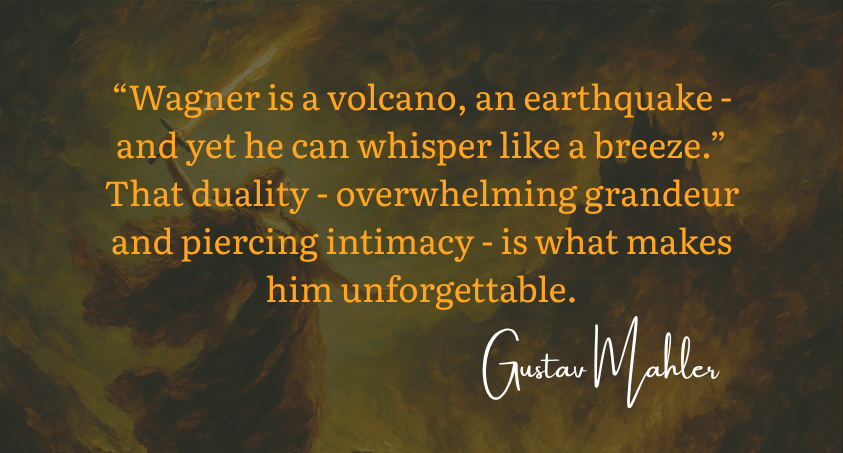
"Wagner is a volcano, an earthquake and yet he can whisper like a breeze."
Gustav Mahler
That duality overwhelming grandeur and piercing intimacy is what makes him unforgettable. Wagner's power lies in being larger than what you already know of him. The listeners who have sat with the Ring for fifty years would tell you the same thing as someone who heard Lohengrin for the first time last month: there is always more.
2026 Programme
This November, we travel to Paris for the complete Ring Cycle at the Opera Bastille, led by Andreas Schager and Tamara Wilson, conducted by Pablo Heras-Casado.
First-timers and returning devotees travel together, with pre-performance talks, shared dinners, and a curated itinerary that gives the music room to settle.
View the Ring Cycle Tour Speak with Our TeamIs Wagner too difficult for beginners?
Not at all. Wagner's music is a form of emotional storytelling that can resonate with everyone. A great starting point is The Flying Dutchman or Lohengrin, both of which are accessible and filled with Wagner's dramatic brilliance.
Which Wagner opera should I see first?
The Flying Dutchman or Lohengrin are the most consistently recommended starting points. Both are shorter than the Ring Cycle operas, dramatically focused, and filled with Wagner's signature orchestral power without the mythological complexity of his later works. Tannhauser is an excellent next step after either.
How long is the Wagner Ring Cycle?
The complete Ring Cycle comprising Das Rheingold, Die Walkure, Siegfried, and Gotterdammerung runs approximately 15 to 17 hours of music in total. It is staged over four evenings, spanning four to six days, not in a single sitting. Individual operas range from approximately 2.5 hours (Das Rheingold, with no interval) to approximately 5.5 hours (Gotterdammerung, with two intervals).
What is a leitmotif in simple terms?
A leitmotif is a short, recurring musical phrase that Wagner associates with a specific character, object, or idea. In the Ring Cycle, the Valhalla motif announces the gods' fortress; the Sword motif signals Siegfried's heroic destiny. These phrases return throughout the opera, transforming as the drama develops. They function as the orchestra's own form of storytelling, running alongside and sometimes in contrast with what the characters say.
What is Gesamtkunstwerk?
Gesamtkunstwerk (pronounced ge-ZAHMT-kunst-verk) is a German term meaning "total work of art." It was Wagner's guiding concept: the idea that opera should be a complete fusion of music, drama, poetry, visual design, and myth not a showcase for individual vocal performances, but a unified experience that engulfs the audience entirely. Wagner designed the Bayreuth Festspielhaus specifically to achieve this: a darkened auditorium, a sunken orchestra pit, and a stage built for immersive theatrical scale.
Is Bayreuth the best place to see Wagner?
Bayreuth's Festspielhaus, which Wagner designed himself and where the Ring Cycle premiered in 1876, remains the most historically significant venue for his operas. Its sunken, covered orchestra pit creates a distinctive blended sound unlike any other house. However, productions at Vienna, Munich, Berlin, Milan, and Paris offer world-class casts, exceptional acoustics, and productions of comparable artistic ambition. For first-time listeners especially, any of these houses provides a fully authentic Wagner experience.
Can I follow a Wagner opera without knowing German?
Yes. All major European opera houses provide surtitles in English, and often additional languages, projected above the stage or on individual seat-back screens. Reading a synopsis before the performance is helpful for orientation, but the music communicates the emotional content directly. Most experienced opera-goers advise using surtitles selectively and keeping your attention on the stage and orchestra as much as possible.
How do I prepare for my first Wagner opera?
Read a synopsis, listen to a recording of one or two well-known excerpts (the Prelude to Das Rheingold, the Ride of the Valkyries, or the Bridal Chorus from Lohengrin), and arrive without the expectation of understanding everything. Wagner's music is designed to be felt before it is fully understood. First contact is the goal, not mastery.
The lights dim, the first chord sounds, and the music reaches you before you have understood a word. That is opera's pull, and its invitation. There is always more happening on the stage than any of us catches, and the more you learn to notice, the m
August 20, 2026
For many first-time listeners, the name Richard Wagner may initially evoke awe, curiosity, and perhaps a hint of hesitation. His operas are famously long, his stories mythic and layered, and his reputation as a revolutionary artist larger than life. The i
September 22, 2025

Richard Wagner was more than a composer - he was a force of nature who reshaped the very idea of what opera could be. Born in Leipzig in 1813, Wagner defied convention at every turn, fusing myth, music, poetry, and staging into something unprecedented.
September 19, 2025
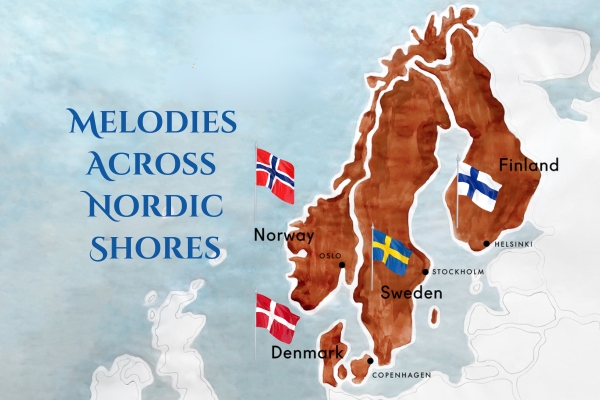
A Cultural Journey Through Time Opera has been esteemed as a significant art form in Scandinavia for many years. It is characterized by the intricate integration of classical traditions with innovative contemporary performances.
December 27, 2024
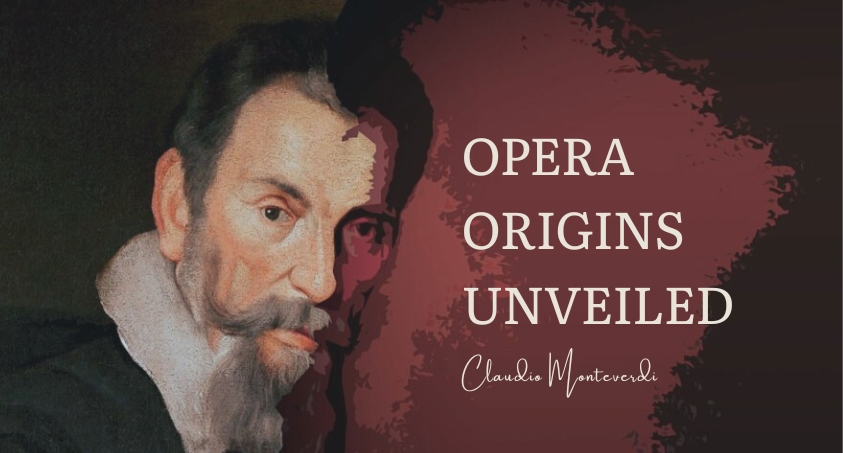
The Renaissance was a period of profound transformation that ushered in a new era of creativity and expression. Among its many artistic innovations, opera stands out as a unique fusion of music, drama, and visual spectacle.
September 05, 2024