What Is Opera
Opera is a dramatic art form in which a musical score is combined with a sung text (the libretto) and staged theatrical performance. Unlike musical theatre, opera relies on the trained, unamplified singing voice to carry the drama from stage to audience. It originated in Florence, Italy around 1597 and has produced a continuous repertoire spanning more than four centuries, from Monteverdi to Verdi to contemporary composers.
Opera combines music, drama, poetry, visual design, and performance into a single unified experience. That is what makes it, even now, unlike anything else on a stage.
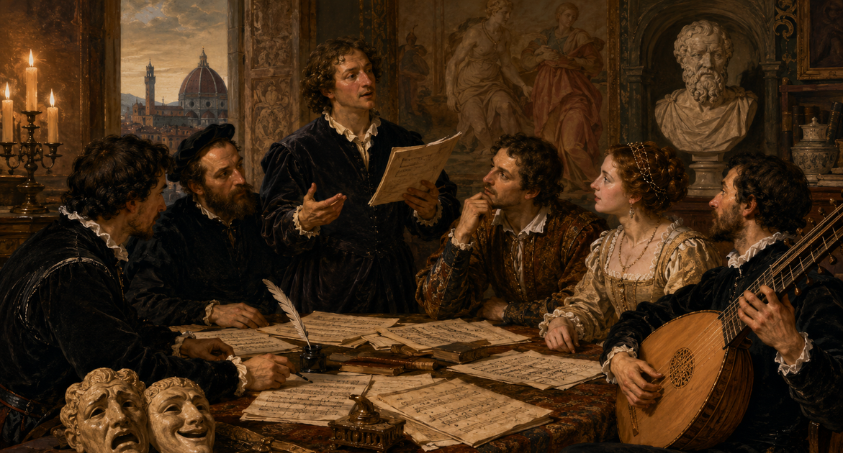
Opera began as a deliberate experiment. In the late 16th century, a group of Florentine intellectuals, poets, and musicians known as the Camerata de' Bardi gathered to revive what they believed to be the expressive power of ancient Greek drama, in which text and music were inseparable. The result was a new form they called dramma per musica, meaning drama through music.
Florence is considered the birthplace of opera. Jacopo Peri (Italian, 1561-1633) composed Dafne around 1597, generally considered the first opera, though the score is largely lost. His Euridice (1600), performed for the wedding of Henry IV of France and Maria de' Medici, is the earliest opera for which a complete score survives.
The Baroque era established opera as a serious commercial art form, spreading it from Italian courts across France, Germany, and England, and producing the first permanent public opera houses.
Claudio Monteverdi (Italian, 1567-1643), widely considered the first great opera composer, raised the form to a new level of emotional intensity with L'Orfeo (1607). His achievement lay in matching orchestral colour to dramatic situation, a technique all subsequent opera composers would build upon. Notable Baroque works include Henry Purcell's Dido and Aeneas (1689) and Jean-Baptiste Lully's Armide (1686), each reflecting the national opera traditions developing outside Italy.
The Classical period brought structural clarity and emotional directness to opera. Composers moved away from Baroque ornamentation toward a style in which melody served the drama.
Wolfgang Amadeus Mozart (Austrian, 1756-1791) is the defining figure of this era. His operas, including Don Giovanni (1787), The Marriage of Figaro (1786), and The Magic Flute (1791), remain among the most performed works in the repertoire. Mozart possessed an unmatched ability to reveal character through music; his villains are as convincing as his heroes. The Classical period also saw the rise of opera buffa, the comic form that gave audiences recognizable, fallible characters in place of mythological heroes.
Romantic opera placed individual emotion at the centre of the dramatic experience. Composers wrote for singers of exceptional power and range, and the orchestra grew in size and expressive capacity to match.
Giuseppe Verdi (Italian, 1813-1901) is the towering figure of Italian Romantic opera. His works, including La Traviata (1853), Rigoletto (1851), Otello (1887), and Aida (1871), are built on dramatically direct, deeply melodic writing that gives singers extraordinary expressive scope. Experience Verdi's masterworks in the Italian houses where they premiered on our Verdi Festival in Italy.
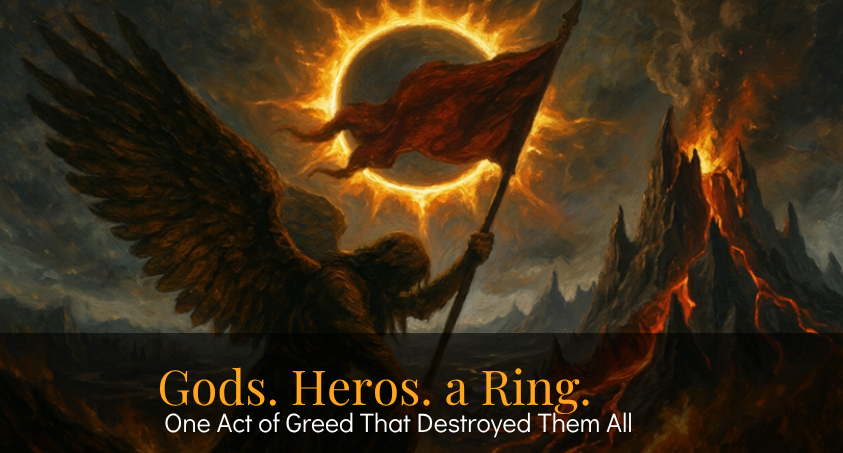
Richard Wagner (German, 1813-1883) worked on a different scale entirely. He rejected the conventions of Italian opera and developed what he called Gesamtkunstwerk, the total work of art, in which music, poetry, staging, and performance function as one indivisible whole. His four-opera cycle Der Ring des Nibelungen, completed in 1876, remains the most ambitious project in the history of Western music drama. Discover Wagner's Ring Cycle in Paris on our 2026 programme.
On Our 2026 Programme
Verdi and Wagner are both on our 2026 programme. Our Verdi Festival tours Italy's historic stages; our Ring Cycle tour brings Wagner's epic to Paris.
Explore 2026 Opera ToursThe 20th century fragmented opera's musical language. Benjamin Britten (British, 1913-1976) wrote Peter Grimes (1945), a psychologically sophisticated work that established British opera as a serious force. Philip Glass (American, born 1937) brought minimalism to the stage with Einstein on the Beach (1976). Contemporary opera continues to absorb new musical languages and address current subjects. The form remains alive and contested.
Opera is built from several distinct elements that work together to create the full experience. Understanding each one changes what you hear and see.
The orchestral score and the vocal writing together form the backbone of any opera. The conductor shapes both simultaneously. The orchestra sets atmosphere, drives narrative tension, and supports or counters the singers. What distinguishes operatic music from other orchestral music is that the score must serve the drama moment to moment: every harmonic shift answers something happening on stage.
The libretto is the opera's text, its sung and spoken words. Great librettists are rare: Lorenzo Da Ponte wrote the texts for Mozart's three great Italian operas; Arrigo Boito wrote the libretti for Verdi's Otello and Falstaff. When a libretto and score work in genuine partnership, the result can be more emotionally concentrated than either text or music alone.
The unamplified human voice is the instrument that makes opera operatically distinct. Opera singers develop for years, sometimes decades, the technique required to project over a full orchestra in a hall of 2,000 people, sustaining power, control, and expressive nuance simultaneously. No microphone. No amplification. What you hear in the hall is entirely what the singer is physically producing. That physical reality is part of what makes a live performance feel unlike any recording.
Staging encompasses sets, costumes, lighting, and directorial vision. A traditional production places the opera in its historical period; a contemporary production may reset it entirely. Both approaches are legitimate. What changes is the interpretive lens. Supertitles, projected translations above the stage, are standard in most international houses today, making opera in a foreign language fully accessible to new audiences.
Opera is not a single form. It has developed several distinct genres across four centuries, each with its own conventions, musical style, and dramatic character.
Opera seria, or serious opera, dominated the Baroque and early Classical periods. It drew its subjects from classical mythology and ancient history, featured idealized heroic characters, and used a formal musical structure built around extended solo arias. Handel's Giulio Cesare (Julius Caesar, 1724) is among the finest surviving examples.
Opera buffa, or comic opera, emerged in 18th-century Naples as a counterpoint to the formality of opera seria. It featured everyday characters, servants, merchants, and young lovers, in recognizable domestic situations with lighter musical textures. Mozart's The Marriage of Figaro is the form's masterpiece.
Bel canto, meaning beautiful singing, describes both a vocal style and an operatic tradition associated with Vincenzo Bellini (1801-1835), Gaetano Donizetti (1797-1848), and the early Gioachino Rossini (1792-1868). The form demands exceptional vocal agility and lyrical phrasing. The canonical works are Norma (Bellini), Lucia di Lammermoor (Donizetti), and The Barber of Seville (Rossini). Hear bel canto at its finest on our Spring Opera Week in Vienna.
Grand opera is the French tradition of the early-to-mid 19th century: monumental in scale, featuring large choruses, elaborate stage spectacle, historical subjects, and multiple acts including ballet sequences. Giacomo Meyerbeer was its defining composer. Verdi absorbed its conventions into his middle-period works, including Aida.
Wagner rejected the label "opera" for his mature works, preferring Musikdrama, or music drama. In a music drama, the orchestra carries continuous musical argument rather than supporting individual numbers; there are no conventional arias in the Italian sense. His Tristan und Isolde (1865) and the Ring Cycle exemplify this approach.
Understanding the distinction between opera and music drama is useful context before attending a Wagner performance. Join us for Wagner's Ring Cycle in Paris, 2026.
Most operas are divided into two to five acts, each subdivided into scenes. Acts provide the primary dramatic structure, roughly equivalent to acts in a play. Each act ends at a moment of tension or resolution, and intermissions give the audience time to absorb what has happened before the drama resumes.
Most Italian and German operas run between two and a half and three and a half hours, with one or two intermissions. Mozart's operas are generally similar in length. Wagner's operas are in a category of their own: Tristan und Isolde runs approximately four hours; the four evenings of the Ring Cycle total around fifteen hours of music across separate performances. Intermissions at major European houses are often 30 to 45 minutes and are a social occasion in their own right.
Opera uses a set of distinct musical forms to structure the drama and define the relationship between voice and orchestra. Knowing what to listen for transforms the experience.
The overture is the orchestral introduction performed before the curtain rises. It establishes the musical world of the opera: its key, its mood, and often its principal themes. Mozart's overture to Don Giovanni opens with the same music that will accompany the Commendatore's ghost in the final scene. Some overtures work as independent concert pieces; others dissolve directly into the first act.
An aria is an extended solo vocal piece within an opera, used to express a character's emotional state at a pivotal dramatic moment. The aria produces opera's most celebrated passages: "Casta diva" from Norma, "Nessun dorma" from Turandot, the "Queen of the Night" aria from The Magic Flute. Arias are often the passages audiences know before they know the operas themselves.
Recitative is speech-like singing used to advance the plot between arias. It follows the natural rhythm of speech rather than a strict musical pulse and carries the narrative action: the arguments, decisions, and revelations that move the drama forward. It is the connective tissue between the opera's emotional peaks.
The chorus represents crowds, communities, armies, and societies. In Verdi's operas, the chorus is often a dramatic protagonist in its own right. An ensemble brings multiple soloists together simultaneously, each singing their own emotional perspective in counterpoint. The ensemble finales of Mozart's operas are among the most structurally complex achievements in vocal music.
Opera classifies singers by the range, weight, and timbre of their voice. The main categories:
A single performance may feature all six voice types simultaneously. Learning to hear the differences between them is one of the first pleasures of becoming an opera listener.
Opera has been declared dying or irrelevant in roughly every decade since the 18th century. It survives because it does something no other art form does: it places a human being, trained over years for this precise purpose, in a large room with 2,000 other people, and asks them to communicate an extreme emotional state using only their body and voice, without amplification.
That is an unusual act. In the right performance, in the right house, it produces a response in the audience that is correspondingly unusual. Not quite like anything else you will experience in a theater.
HAT Tours has been taking guests to the stages of Europe since 1982. In that time, we have watched audiences arrive curious and leave changed: the first-timer who came for the history and left understanding the voice; the seasoned enthusiast who heard a soprano in Munich and called it the finest thing they had ever witnessed. Opera asks something of you. It gives back in proportion.
If you are attending opera for the first time, a few practical things are worth knowing.
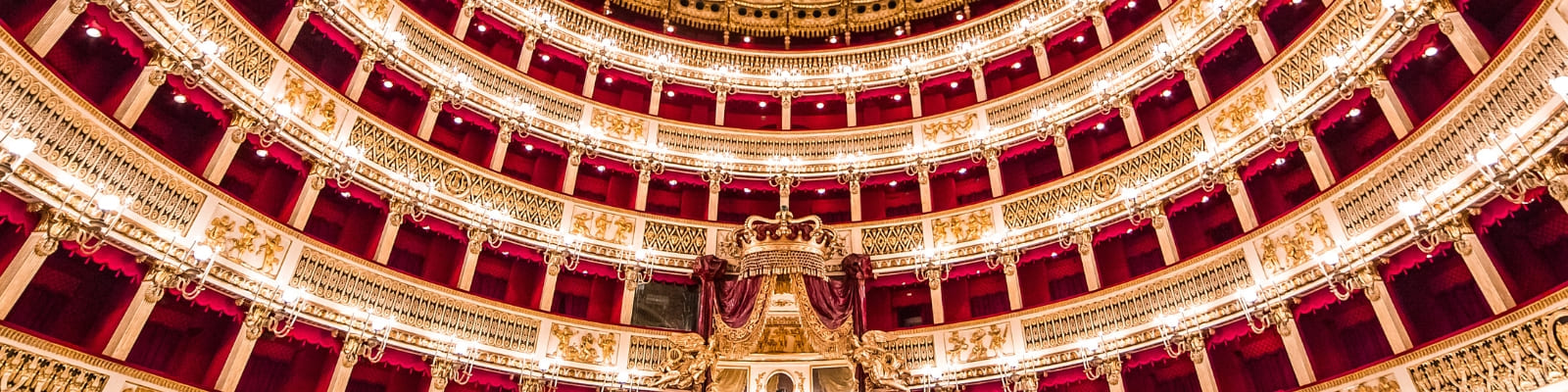
Most major European opera houses are historic buildings with exceptional acoustics. La Scala in Milan, the Vienna State Opera, the Bayerische Staatsoper in Munich, the Fenice in Venice, the Bayreuth Festspielhaus: these are not neutral venues. The architecture is part of the experience.
Learn more about the great European opera houses where our tours perform.
Most international houses project translations above or beside the stage. You will follow the story. The language of performance is not a barrier.
Dress codes vary by house and occasion. Smart casual is appropriate at most European opera houses. Vienna's opening night and Bayreuth demand more. If you attend as part of a HAT Tours programme, we will advise you on specific dress expectations for each venue well in advance.
Plan for them. A three-hour opera typically includes one or two intervals. The lobby, the bar, the evening light outside a Viennese or Parisian opera house: intermissions at European houses are part of the social ritual of opera-going, not merely a pause.
Our tours include pre-performance briefings, premium seating, and accompaniment by opera specialists. If you are new to the form, there is no better way to encounter it than with people who know both the repertoire and the houses.
Learn more about how our tours work.
Experience Opera in Europe
Opera is best understood in the theater. HAT Tours has been guiding opera lovers to the great stages of Europe since 1982, from La Scala to the Bayreuth Festspielhaus, from the Verona Arena to the Vienna State Opera. If you are ready to hear it live, we would like to show you the way.
View Our 2026 Opera Tours Request InformationWhat is opera?
Opera is a dramatic art form in which a musical score is combined with a sung text (the libretto) and staged theatrical performance. It relies on the trained, unamplified singing voice and originated in Florence, Italy around 1597.
Who invented opera?
Opera was created by the Camerata de' Bardi, a group of Florentine scholars and musicians, in the late 16th century. Jacopo Peri composed the first opera, Dafne, around 1597. Claudio Monteverdi's L'Orfeo (1607) is considered the first operatic masterpiece.
What language is opera sung in?
Opera is sung in the language of its composition. Italian, German, French, and Russian are the most common operatic languages. Most international opera houses today project supertitles, translated text above the stage, making language a secondary concern for the audience.
What is an aria in opera?
An aria is an extended solo vocal piece within an opera, used to express a character's emotional state at a pivotal dramatic moment. Famous examples include "Nessun dorma" from Puccini's Turandot and the "Queen of the Night" aria from Mozart's The Magic Flute.
What is the difference between opera seria and opera buffa?
Opera seria draws from mythology and history, with heroic characters and formal musical structure. Opera buffa features everyday characters in humorous domestic situations with lighter musical textures. Mozart composed masterpieces in both forms.
How long does an opera last?
Most operas run between two and a half and three and a half hours, including one or two intermissions. Wagner's operas are significantly longer: Tristan und Isolde runs approximately four hours; his Ring Cycle totals around fifteen hours across four separate evenings.
What should I wear to the opera?
Dress codes vary by house and occasion. Smart casual is appropriate at most European opera houses. Vienna's opening night and Bayreuth are more formal occasions. On HAT Tours programmes, guests receive dress guidance specific to each venue before they travel.
About the Author
Written by the editorial team at HAT Tours - European Opera Tours. Over four decades, our team has attended performances at La Scala, the Vienna State Opera, the Bayreuth Festspielhaus, the Bayerische Staatsoper in Munich, the Fenice in Venice, the Paris Opera, and more than thirty other European opera houses.
The lights dim, the first chord sounds, and the music reaches you before you have understood a word. That is opera's pull, and its invitation. There is always more happening on the stage than any of us catches, and the more you learn to notice, the m
August 20, 2026
For many first-time listeners, the name Richard Wagner may initially evoke awe, curiosity, and perhaps a hint of hesitation. His operas are famously long, his stories mythic and layered, and his reputation as a revolutionary artist larger than life. The i
September 22, 2025

Richard Wagner was more than a composer - he was a force of nature who reshaped the very idea of what opera could be. Born in Leipzig in 1813, Wagner defied convention at every turn, fusing myth, music, poetry, and staging into something unprecedented.
September 19, 2025
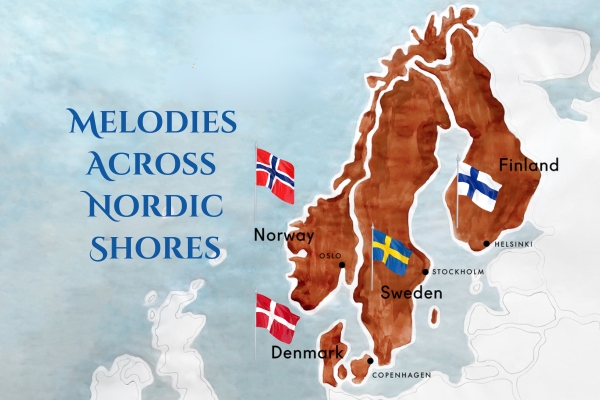
A Cultural Journey Through Time Opera has been esteemed as a significant art form in Scandinavia for many years. It is characterized by the intricate integration of classical traditions with innovative contemporary performances.
December 27, 2024
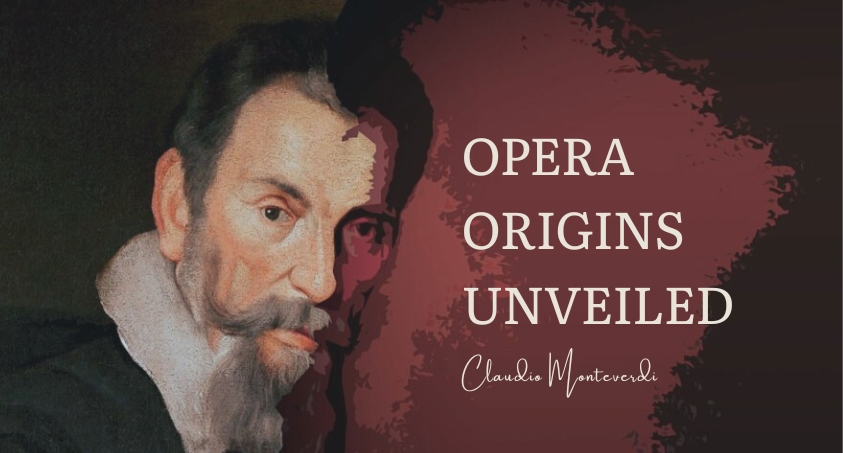
The Renaissance was a period of profound transformation that ushered in a new era of creativity and expression. Among its many artistic innovations, opera stands out as a unique fusion of music, drama, and visual spectacle.
September 05, 2024