
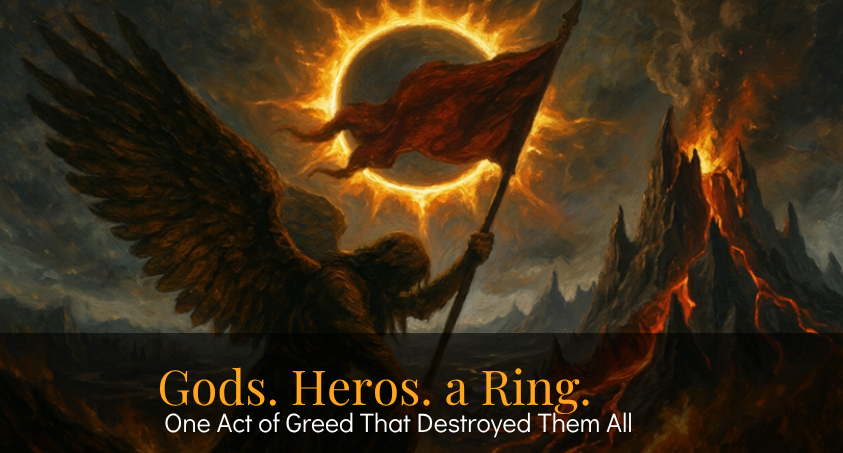
Why Wagner Can Feel Intimidating - And Why He's Worth it

Why Wagner Can Feel Intimidating - And Why He's Worth it

Posted On: September 22, 2025
Author: Alister

For many first-time listeners, the name Richard Wagner may initially evoke awe, curiosity, and perhaps a hint of hesitation. His operas are famously long, his stories mythic and layered, and his reputation as a revolutionary artist larger than life. The idea of experiencing Der Ring des Nibelungen (The Ring Cycle), which spans more than 15 hours in performance, can sound daunting at first. However, it's important to remember that despite its grandeur, Wagner's music is not an exclusive club, but rather a welcoming space for all.

Here's the paradox: Wagner is both the most demanding and the most direct of composers. His music delves into the deepest philosophical ideas, yet it can move an audience with a single surge of strings, a soaring horn call, or an intimate love duet that feels like a personal whisper. Wagner envisioned opera not as an elite puzzle to decode but as a total work of art (Gesamtkunstwerk) designed to engage the senses, bringing together music, drama, and visual elements to create a unified and immersive experience.


Wagner for Newcomers and Veterans

For those stepping into Wagner's world for the first time, it helps to know that you don't need to grasp every leitmotif or every twist of mythology to be swept away. And for seasoned Wagnerians, each performance offers new layers - a conductor's tempo shift, a singer's interpretation, a stage design that reframes familiar music. That's the magic: Wagner never stops revealing himself, whether it's your first encounter or your fiftieth.

Where to Begin - Accessible Wagner Operas

While the Ring Cycle is the summit, there are gentler climbs that introduce Wagner's sound world without the marathon:

The Flying Dutchman (2.5 hours): Storm-driven and ghostly, it rushes forward with thrilling intensity.

Lohengrin (3.5-4 hours): A fairy-tale atmosphere with shimmering orchestration and the universally known "Bridal Chorus."

Tannhauser (4 hours): Wrestling between sacred and profane love, it's filled with unforgettable melodies.

Tristan und Isolde (4.5 hours): More demanding, but its harmonies changed the course of Western music.

Even veteran Wagnerians often return to these works, savoring how different productions highlight new colors in familiar music.

How to Listen - Leitmotifs Without the Stress

One of Wagner's significant innovations was the leitmotif - a short musical idea linked to a character, object, or emotion. These motifs, which recur throughout the opera, serve as musical signposts that guide the listener through the complex narrative. For a beginner, just knowing they exist and recognizing when a phrase feels familiar is enough to enhance the listening experience.

Notice when a phrase feels familiar - it's Wagner planting recognition.

In The Ring, the Valhalla motif announces the grandeur (and eventual fragility) of the gods' fortress.

The Sword motif blazes with Siegfried's triumph, just as modern cinema uses recurring themes for heroes and villains.

For seasoned ears, leitmotifs are a lifelong study. For new listeners, they serve as musical signposts that make the experience richer.


What to Expect at a Wagner Performance

Length: 3-5 hours (the Ring Cycle operas run longer). Think of it as a journey, not a sprint.

Orchestra: More than accompaniment - it is the drama, often revealing things the characters don't yet know.

Surtitles: You'll have English (and often multiple languages) projected above the stage or on seat-backs.

Intensity: Expect moments of hushed tenderness to explode into waves of sound that feel almost cinematic.

Tips for First-Timers (That Even Veterans Use)

Read a synopsis before you go - even five minutes helps.

Don't cling to surtitles; let your eyes drift back to the stage and the music.

Most importantly, don't pressure yourself to 'get it all.' Even the most devoted Wagnerians are still uncovering details decades later.

Wagner Together - Shared Journeys

Wagner is best appreciated within a community, where both first-timers and experts come together on tours and in opera houses. They sit side by side, engaging in discussions about leitmotifs, staging, and the particular passages that left them breathless. This shared journey is not just about the music but about the connections and shared enthusiasm it fosters. A veteran Wagnerian once told me, "Every time I hear the Ring, I realize I know less - and love it more."

For newcomers, this shared enthusiasm is infectious. For seasoned listeners, it's a reminder of the awe that first drew them in.

Closing Notes - The Door Is Always Open

You don't need to begin with a 16-hour Ring Cycle. Start with a more approachable opera, bring curiosity instead of fear, and let the music lead you.

As Gustav Mahler said: "Wagner is a volcano, an earthquake - and yet he can whisper like a breeze." That duality - overwhelming grandeur and piercing intimacy - is what makes him unforgettable.

And when you're ready, Europe's great opera houses - Vienna, Munich, Berlin, Milan, and Bayreuth itself - await. The journey into Wagner never ends; it only deepens.

FAQs

Is Wagner too difficult for beginners?

Not at all. Wagner's music is a form of emotional storytelling that can resonate with everyone. A great starting point could be The Flying Dutchman or Lohengrin, both of which are accessible and filled with Wagner's dramatic brilliance.

Which Wagner opera should I see first?

Lohengrin or The Flying Dutchman - accessible, shorter, and filled with Wagner's dramatic brilliance.

How do I prepare for a Wagner opera?

Read a synopsis, listen to famous excerpts (Ride of the Valkyries, "Bridal Chorus"), and arrive open to the experience.

Are surtitles available?

Yes, nearly all principal opera houses provide translations above the stage or on seat-backs, making it easier for you to follow the story and fully immerse yourself in the experience. So, rest assured, you won't miss a beat.


Categories:

Recent Post

Why Wagner Can Feel Intimidating - And Why He's Worth it

Why Wagner Can Feel Intimidating - And Why He's Worth it

For many first-time listeners, the name Richard Wagner may initially evoke awe, curiosity, and perhaps a hint of hesitation. His operas are famously long, his stories mythic and layered, and his reputation as a revolutionary artist larger than life. The i

September 22, 2025

Richard Wagner The Visionary Composer Who Changed Opera Forever

Richard Wagner The Visionary Composer Who Changed Opera Forever

Richard Wagner was more than a composer - he was a force of nature who reshaped the very idea of what opera could be. Born in Leipzig in 1813, Wagner defied convention at every turn, fusing myth, music, poetry, and staging into something unprecedented.

September 19, 2025
The Evolution of Scandinavian Opera: From Classical to Contemporary

The Evolution of Scandinavian Opera: From Classical to Contemporary

A Cultural Journey Through Time Opera has been esteemed as a significant art form in Scandinavia for many years. It is characterized by the intricate integration of classical traditions with innovative contemporary performances.

December 27, 2024
A Deep Dive into the Cultural Roots and Timeless Evolution of Opera

A Deep Dive into the Cultural Roots and Timeless Evolution of Opera

The Renaissance was a period of profound transformation that ushered in a new era of creativity and expression. Among its many artistic innovations, opera stands out as a unique fusion of music, drama, and visual spectacle.

September 05, 2024
First Steps into Opera - A Beginner's Guide to Key Terms and Concepts

First Steps into Opera - A Beginner's Guide to Key Terms and Concepts

Opera, a dramatic art form combining music, singing, acting, and often dance, has captivated audiences for centuries. This guide aims to simplify opera's essential terms and concepts, making it accessible and engaging for beginners.

August 12, 2024